courtesy of Alessandro:
Outside Bristol Zoo is the car park, with spaces for 150 cars and 8 coaches. It has been manned 6 days a week for 23 years by the same charming and very polite car park attendant with the ticket machine. The charges are £1. per car and £5 per coach.
On Monday 1 June, he did not turn up for work. Bristol Zoo management phoned Bristol City Council to ask them to send a replacement parking attendant.The Council said "That car park is your responsibility." The Zoo said "The attendant was employed by the City Council... wasn't he?" The Council said "What attendant?" Gone missing from his home is a man who has been taking daily the car park fees amounting to about £400. per day for the last 23 years...!I make that about £2.7 million !
Latvians may be feeling depressed as a result of the economic crisis which has hammered the Baltic state, but over 500 blonde women did their best to lift spirits in Riga on Sunday with a parade and other "Blonde Weekend" events.
The global economic crisis has hit the Baltic state of Latviaparticularly hard and left the population feeling blue. But one group of Latvian women has taken a novel approach to fighting the pervasive feeling of doom and gloom.


Click on a picture to launch the image gallery (11 Photos)
Though it was far from being a protest march, some women used the opportunity to counter stereotypes. "I am beautiful, but I'm not dumb," Ilone Zigure told the news agency AFP. The student added that she hopes that those of her countrymen who are depressed about the economic crisis will find her "positive energy" contagious.
The parade was just part of a range of events making up Riga's "Blonde Weekend," which also included a golf tournament, a fashion show, a ball and a drawing contest for kids. TheLatvian Blondes Association, which organized the events, hoped to use any proceeds from the weekend's activities toward a playground for handicapped children.
What A Lovely Man Bill Kenwright Is
Now, before I start, I'm a Liverpool fan.
However, my mum's boss is an Evertonian (no one's perfect eh?), now with his team getting to the Cup final this year he was hoping against hope he could take his young lad to the final and so called to book tickets on the day they became available, the lady at the ticket office takes his credit card details and says he has two tickets for the game - up in the gods, but still, he would get to take his son to Wembley to watch his team - a special day out (especially as they don't get there very often eh?).
So, last week comes around but still no sign of the magical tickets - so my mums boss (we'll call him Simon...because that's his name) rings the club to ask what's going on, should he come and pick them up? Only to be told (4 days before the final) that no, he doesn't have tickets!
You can imagine how annoyed he must have been!! So he sits down at his desk and writes the strongest of strongly worded emails to all and sundry (including the Everton supporters club apparently). Thursday afternoon the office phone rings and Simon picks up the phone (they're solicitors so sitting round doing nothing is their idea of hard work) - its only Bill Kenwright!
"Hi Simon, I have seen your email and I'm sorry you have had such a hard time about the tickets - its unacceptable that you should be told you would have the tickets and then not get them and not get told until a few days before the game, I'd like to offer you 4 tickets, pitchside, right next to the tunnel to make it up to you!"
Now I know football these days is all about money (they are businesses after all) but I thought this was a really nice touch, and I can hardly imagine Roman (or many of the other premier league chairmen...sorry, chair-people) doing something similar.
So nice one Bill - you went someway to restoring my faith in there being at least some decent people left in the game and even though you lost, you made Simons young lads year (probably decade judging by their ability to get to major cup finals)!


For us there is no valid definition of socialism other than the abolition of the exploitation of one human being by another.
Thus far, we’ve got a strong rally off the recent trough, with uninspiring sponsorship but good breadth, reasonable but not strikingly attractive valuations, and an overhang of increasingly distressed mortgage and non-residential debt that looks like Armageddon Part II in the offing, because we are doing nothing to restructure it. In my view, the recent advance looks not like a garden of “green shoots,” but very much like a short-squeeze off of an oversold trough. It would be convenient if such bounces could be predicted in advance, but as we observed last year, the market can become very persistently oversold during bear markets, and even an “oversold” decline can go much deeper until the oversold condition is abruptly cleared.
Fundamentally, my view is that the U.S. economy is on very thin ice, and that by focusing on the bailout of corporate bondholders rather than the restructuring of debt, we are courting the risk of a far deeper downturn. Last year, I didn’t think it was conceivable that policy-makers would attempt to address this problem by making lenders whole with public funds. This is an ethical abomination, putting the public in the position of absorbing the losses that should properly be borne by those who provided capital to these institutions. It is not sustainable. What it does it place the public in the position of losing first, but it will not, and cannot prevent the ultimate failure of the debt – for the simple reason that without restructuring, the debt can’t be serviced.
It is true that insurers, pension funds, and other entities own part of the debt of these financial institutions, but they certainly do not own all of it, and to the extent that it is in the public interest to use public funds to reimburse the losses of various entities, that can and should be part of the political process. But to broadly immunize every bondholder of these institutions with public funds is repulsive. Even the bondholders of Bear Stearns can expect to get 100% of their principal back, with interest.
Aside from the abuse of the public trust inherent in these bailouts, it is also offensive to anybody who devotes a significant portion of their income to charity, because there are so many better uses for trillions of dollars. Think about it. Two of the wealthiest people on earth, Warren Buffett and Bill Gates, after lifetimes of work, will be able to commit a combined total of about $100 billion to charity. But that figure is dwarfed by the amount being allocated to protect corporate bondholders from taking a “haircut” on distressed debt, or swapping a portion of it for equity – both perfectly appropriate ways of compartmentalizing the losses of these financial institutions, without public funds, and without receivership or “nationalization.”


NEW YORK (AdAge.com) -- Tropicana's rebranding debacle did more than create a customer-relations fiasco. It hit the brand in the wallet.
The new Tropicana Pure Premium packaging had been on the market less than two months before the company scrapped the redesign.
After its package redesign, sales of the Tropicana Pure Premium line plummeted 20% between Jan. 1 and Feb. 22, costing the brand tens of millions of dollars. On Feb. 23, the company announced it would bow to consumer demand and scrap the new packaging, designed by Peter Arnell. It had been on the market less than two months.
A swift reversal
Now that the numbers are out, it's clear why PepsiCo's Tropicana moved as fast as it did. According to Information Resources Inc., unit sales dropped 20%, while dollar sales decreased 19%, or roughly $33 million, to $137 million between Jan. 1 and Feb. 22. Moreover, several of Tropicana's competitors appear to have benefited from the misstep, notably Minute Maid, Florida's Natural and Tree Ripe. Varieties within each of those brands posted double-digit unit sales increases during the period. Private-label products also saw an increase during the period, in keeping with broader trends in the food and beverage space.
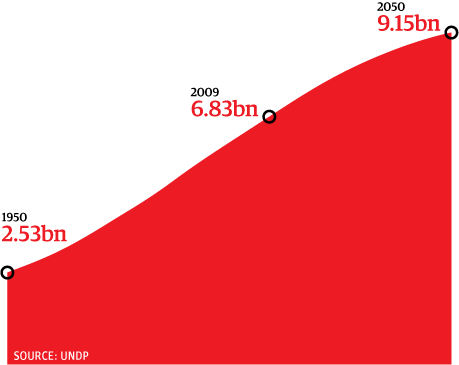

Idle factories, moored container ships, widespread bankruptcies, massive migration back to the hinterlands, strangely clean air—the signs of depression are everywhere in China. Because it makes so many of the goods the world isn’t buying now, China stands to be worse hit than the rest of the world —just as America was during the Depression, when it was the world’s sweatshop. But like America then, China will use tough times to design innovative products that will get it the high profits and the high-value jobs Americans kept to themselves for decades. And that is very bad news for the United States, unless it uses tough times to reinvent itself, too.
“Goldman has already said they will repay their TARP money within a month (obviously all of this negative press scrutiny is getting to them). Easy enough to do: they’ve had billions funnelled to them via AIG, so they can now take that money and “repay” TARP. Nice circular shell game.
And that’s how the Geithner plan will work as well. They’ll all be bidding for each other’s assets at vastly inflated prices, getting a good “mark” on their books and then they’ll dump the crap with the taxpayer. I actually think the plan will work because it’s officially sanctioned larceny. It’s just like me saying, I could get rich if the government gave me the means to rob banks every time I needed money.
Is this a great country, or what?”
“Leopards change spots with amazing celerity when it pays. By the way, I think the next step is pretty obvious with the banks and the US government this morning. Institutions that get rid of toxic assets thanks to the new Geithner plan will then forthwith pay back their TARP loans. Indeed, if they are confident of their refinancing, then they may do it without participating in the program. That way they escape the constraints, and get money. So much for exec comp issues.

Woodford, who runs the £5.3 billion Invesco Perpetual Income and £7.3 billion Invesco Perpetual High Income funds, said he did not believe there were any 'green shoots' around, nor that there would be any in the near future.
He said: 'I think we are in a pretty difficult environment globally and the UK and the US are having a particularly difficult time. The unsual characteristic of this crisis is that it has been running for such a long time and we are unlikely to see any economic recovery soon.'
'My view is that this is going to go a lot longer than the second half of this year. This crisis will encompass a long adjustment...the scale of debt build up is unprecedented. The process of rebalancing the world economy will take many years. We could be in a weak economic environment for three or four years.
'I don't expect to see a sustained growth in this economy or in America for a significant time, three or four years'.
Over the past three years, Woodford has returned -6.1% with the High Income fund and 6.9% with the Invesco Perpetual Income fund while the FTSE All Share TR benchmark fell 27.2% during that period.

The world’s banking system collapsed last fall, was placed on life support at a cost of some trillions of dollars, and remains comatose. We may be too close to the event to grasp its enormity. A vocabulary rich only in euphemisms calls what has happened to the economy a “recession.” We are well beyond that. We are in the midst of the biggest economic crisis since the Great Depression of the 1930’s. It began as a recession — that is true — in December 2007, though it was not so gentle a downturn that it should have taken almost a year for economists to agree that a recession had begun then. (Economists have become a lagging indicator of our economic troubles.)
The word itself is taboo in respectable circles, reflecting a kind of magical thinking: if we don’t call the economic crisis a “depression,” it can’t be one. But no one who has lived through the modest downturns in the American economy of recent decades could think them comparable to the present situation. … It is the gravity of the economic downturn, the radicalism of the government’s responses, and the pervading sense of crisis that mark what the economy is going through as a depression.

Iceland’s de facto bankruptcy—its currency (the krona) is kaput, its debt is 850 percent of G.D.P., its people are hoarding food and cash and blowing up their new Range Rovers for the insurance—resulted from a stunning collective madness.
What led a tiny fishing nation, population 300,000, to decide, around 2003, to re-invent itself as a global financial power?
In Reykjavík, where men are men, and the women seem to have completely given up on them, the author follows the peculiarly Icelandic logic behind the meltdown.
by MICHAEL LEWIS April 2009

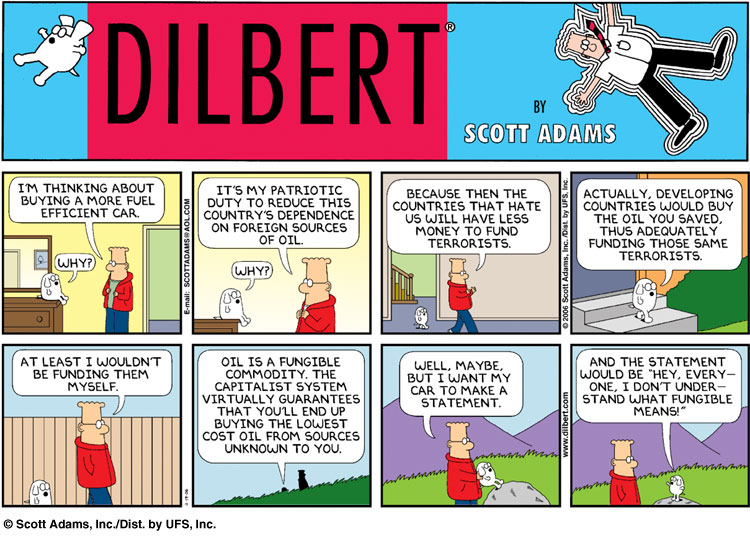
Quantifying the Nightmare Scenarios
By Eric Zitzewitz
There’s no shortage of fear about the economy. But just how fearful should we be? Perhaps financial markets can provide some guidance.

In the last week or so, there have been a number of events that bring up the big question: Will Web-based social networks ever become significant businesses? Or, put another way: Do these social networks--Twitter, Facebook, LinkedIn, MySpace--have the ability to "monetize" their audiences?
My answer: While today, these may not look like great businesses (which hasn't stopped investors' willingness to fund them), I'm convinced that the daily interactions of their vast memberships--and their users' willingness to share their interests, tastes, relationships and intentions, and the massive amounts of data around users' behavior--will eventually lead to substantial revenues and profits. But I don't think that those revenues will come just from the Web advertising standards of banners and contextual search links.
Globalization creates interlocking fragility, while reducing volatility and giving the appearance of stability. In other words it creates devastating Black Swans. We have never lived before under the threat of a global collapse. Financial Institutions have been merging into a smaller number of very large banks. Almost all banks are interrelated. So the financial ecology is swelling into gigantic, incestuous, bureaucratic banks – when one fails, they all fall. The increased concentration among banks seems to have the effect of making financial crises less likely, but when they happen they are more global in scale and hit us very hard. We have moved from a diversified ecology of small banks, with varied lending policies, to a more homogeneous framework of firms that all resemble one another. True, we now have fewer failures, but when they occur ….I shiver at the thought.


 Posts
All Comments
Posts
All Comments